All projects

Artur'in

Seven years as Artur'in's Lead Product Designer, leading a team of five designers, through three successive design systems. Since 2025, Artur'in has been a freelance client: I've designed and built several products there, including the mobile app and the teams' back offices.

arturin.com
Artur'in, interactive prototype

Artur'in helps local businesses and agency networks manage their online presence: posts on social networks and Google, reviews, newsletters, ads. The company is now part of the Solocal group.

Role
Lead Product Designer, then freelance Product Designer & Product Builder
Period
2018 – present
Scope
The customer area, the mobile app, the key-account platform, the back offices
Expertise
UX/UI, design system, mobile apps, AI

The customer area

What businesses and agencies see, on the web and on their phone. They need to post regularly without the time to learn a tool: Artur'in prepares their content, they follow and adjust it.

A home page: where you stand, what goes out this week

When they log in, business owners want to know two things: whether their online presence is growing, and what Artur'in is posting for them. Raw figures and a list of posts answer neither.

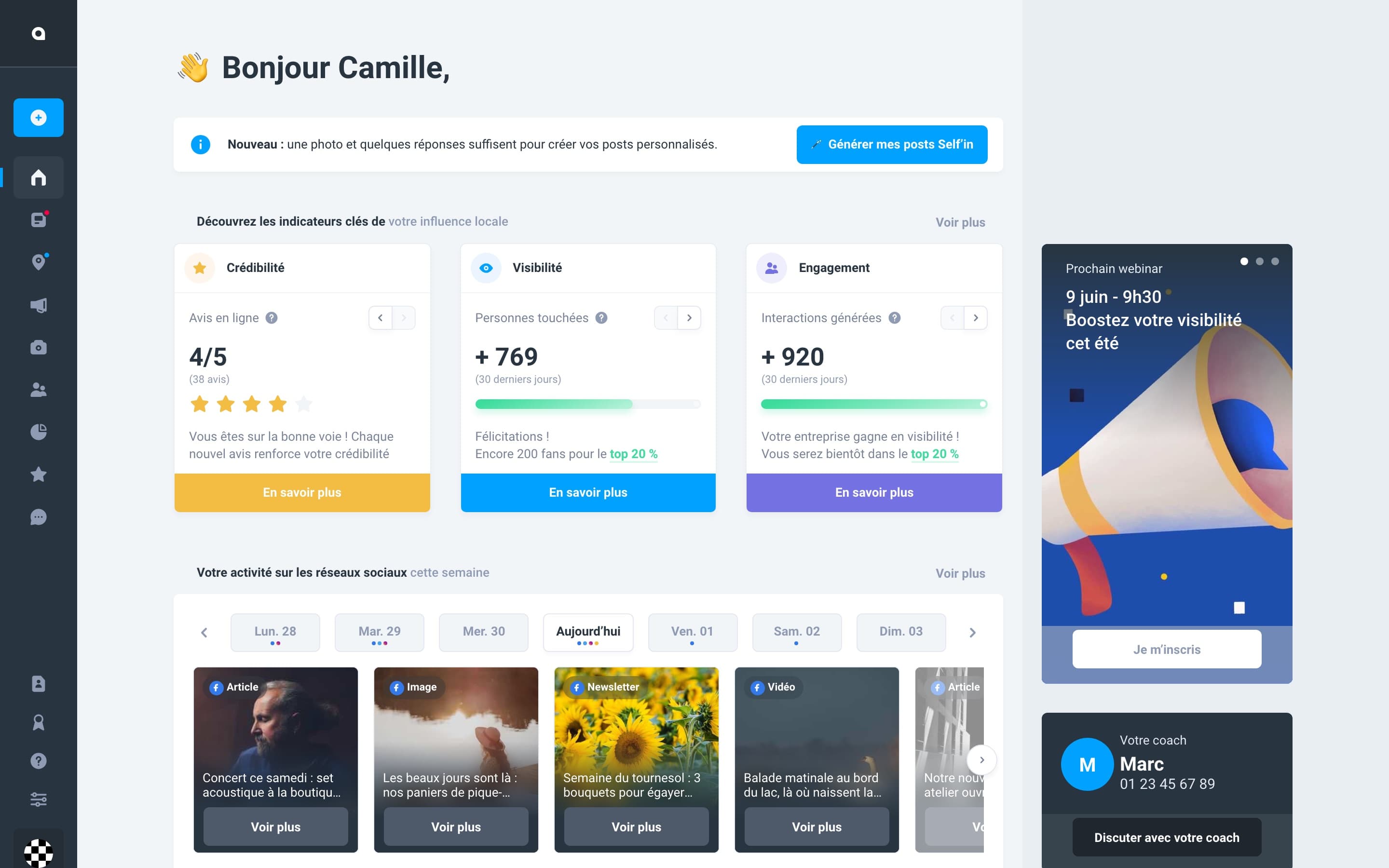
At the top, their figures become three local-influence indicators (credibility, visibility, engagement) that place them against businesses in their sector. Below, their content for the week, day by day: articles, images, videos, newsletters, published, scheduled or awaiting approval. Their coach stays one click away.
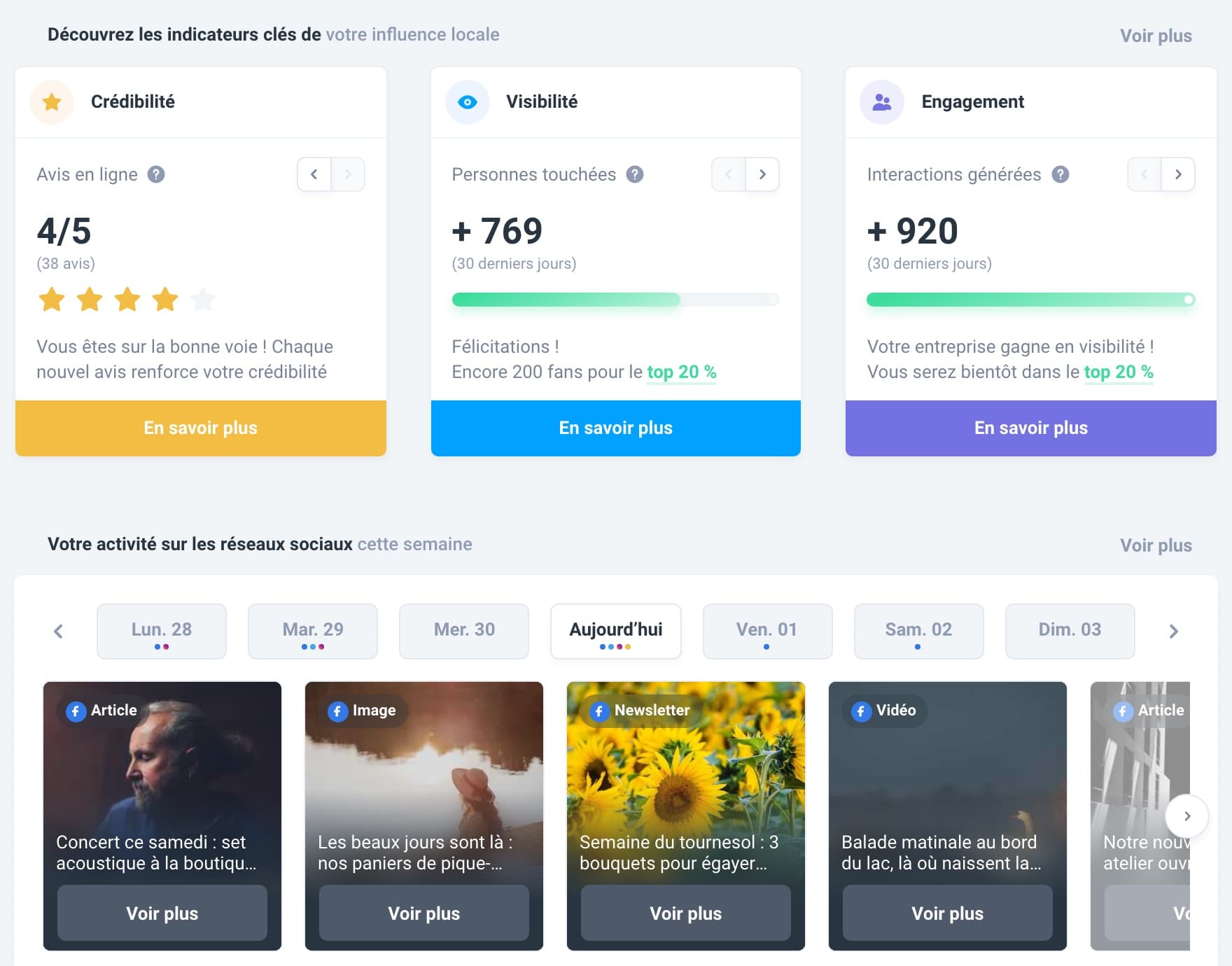
The Artur'in home page: the three local-influence indicators, then the week's content

Seeing where you stand against competitors, then climbing

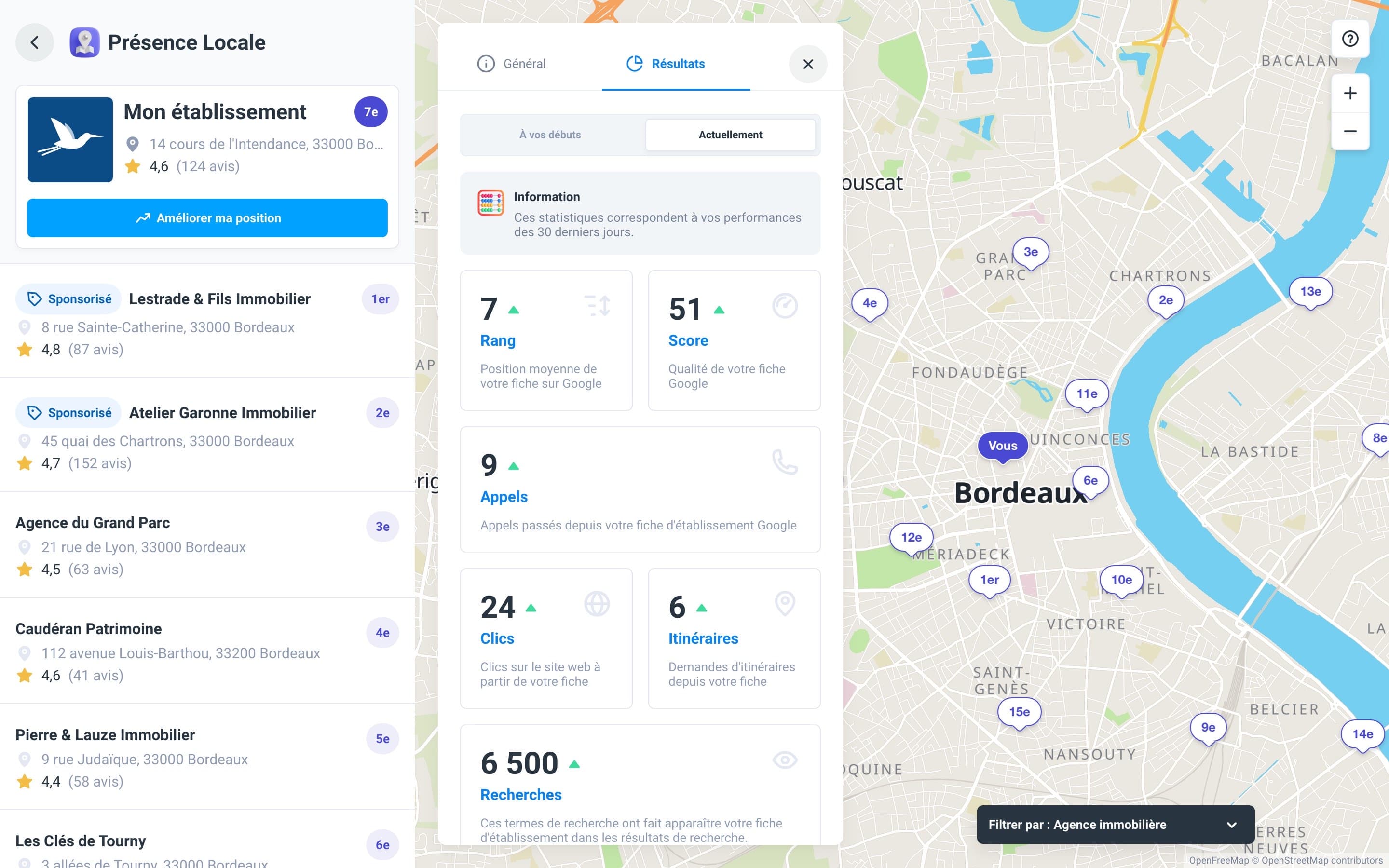
On Google, a business is compared with the ones in its neighbourhood, not with an average. Its statistics alone tell it neither where it stands nor what to do to climb.

Local presence puts the business on the map of its neighbourhood, with each competitor's rank in Google searches, and sets its results against theirs. One button runs an audit of its Google profile: a score, then a guided path that completes it step by step, without leaving the map. The prototype shows that path; the scoring criteria remain Artur'in's.

Local presence, interactive prototype

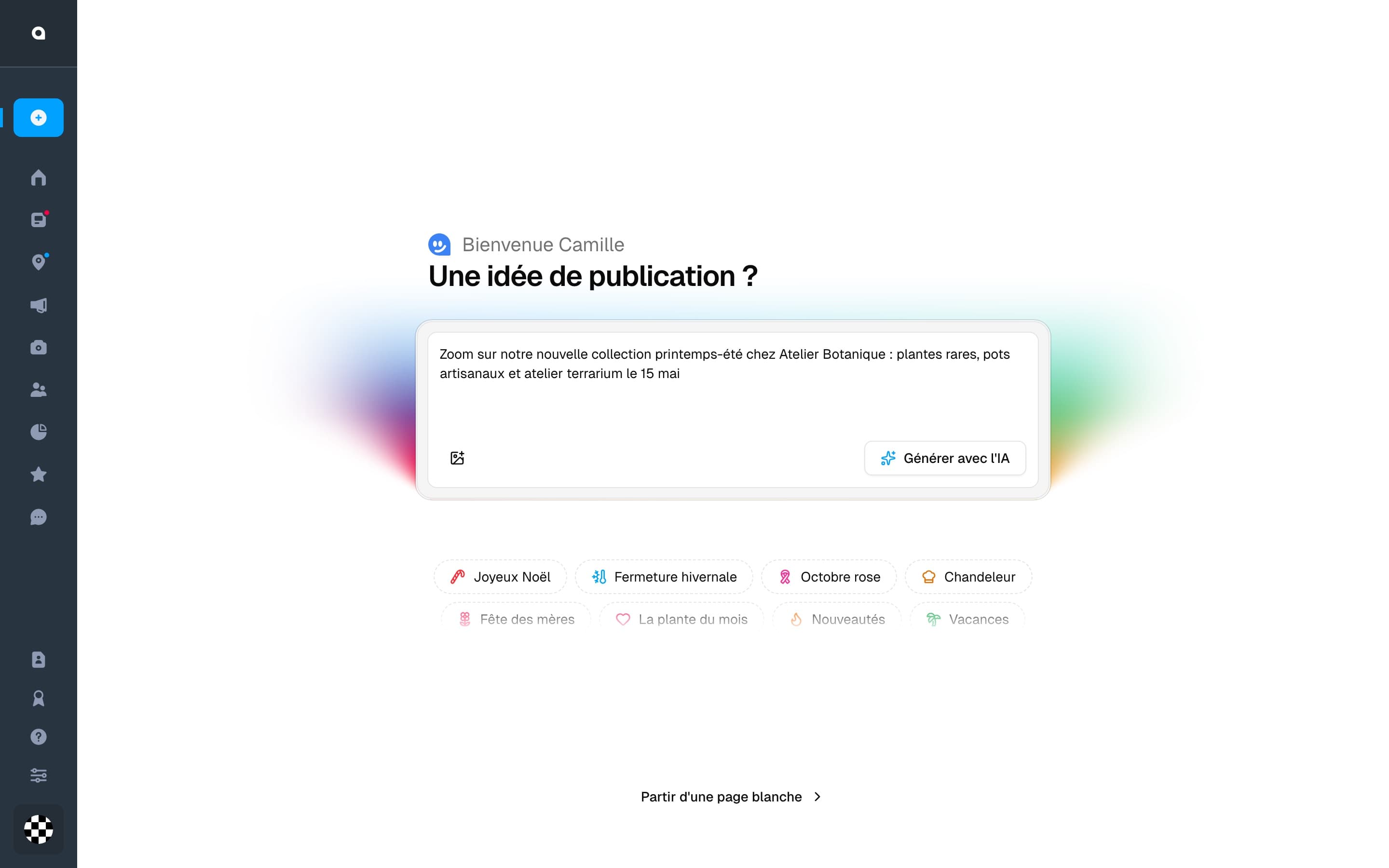
Creating a post from an idea

A post form asks you to decide everything before you see anything.

The creation studio starts from an idea: clients write it in one sentence or paste a link, and AI suggests the visual and the copy, in their brand's tone. They adjust it, then schedule it. The blank page stays one click away for those who'd rather write.

The Artur'in creation studio, interactive prototype

Designed and built

The iOS and Android app

Business owners run their day from their phone, but Artur'in's mobile app had aged and some clients had stopped logging in.

A native app built around everyday tasks: seeing what's left to do, asking for a review in one tap, and answering messages with a reply suggested by AI. Widgets, notifications, and an Android version that feels like Android.

The key⁠-⁠account platform

Key accounts are networks: a head office and dozens of outlets. They have their own version of the platform, built for the way they work, where the head office sees and steers what goes out on each shop.

The head office steers each shop's content

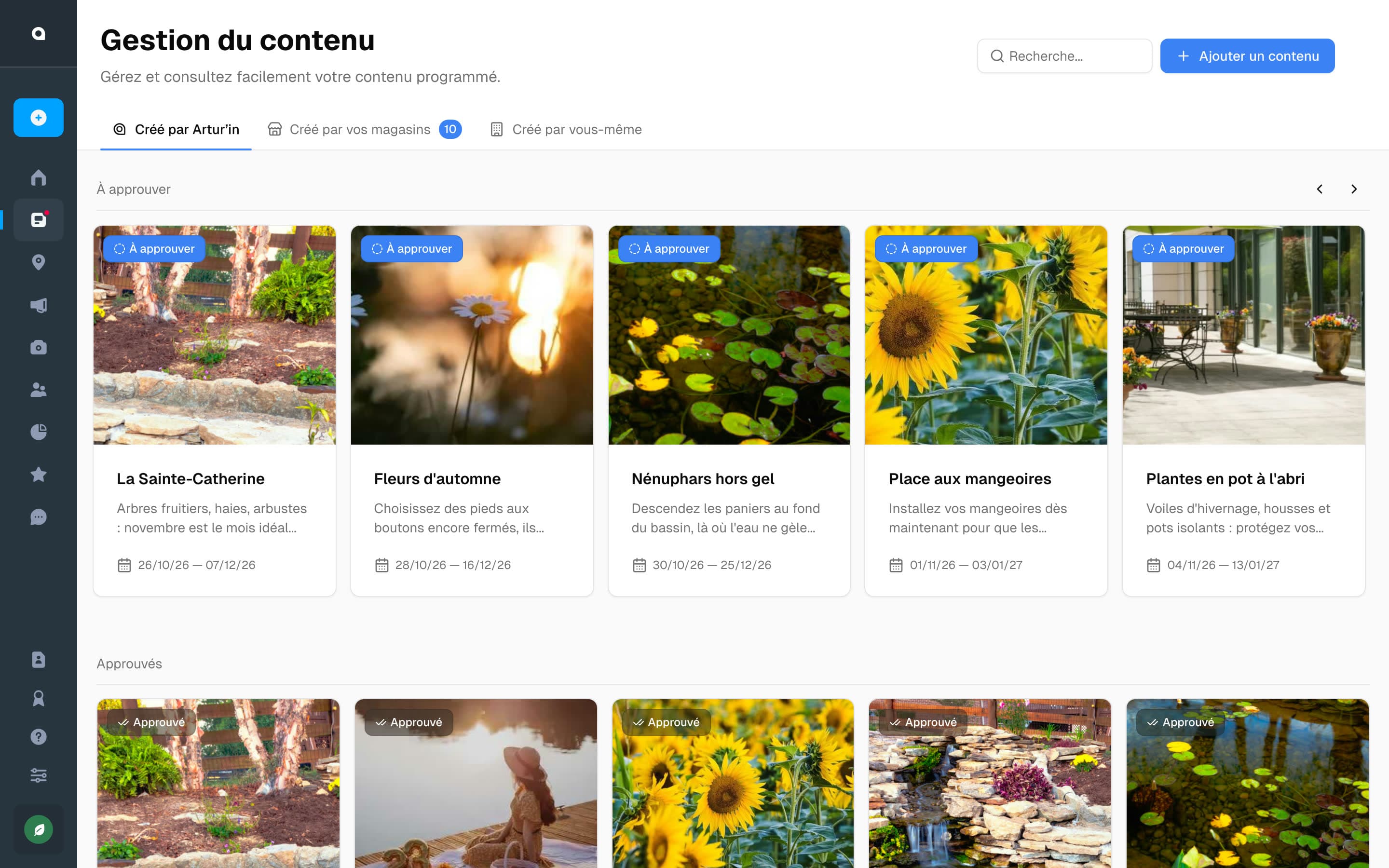
For key accounts, every piece of content went through Artur'in's content team, who moderated it by hand.

Their platform has a content management page I designed: week by week, the head office sees what goes out on each outlet, creates its own posts and approves those suggested by Artur'in or its shops, with each shop's statistics.

posts created by key accounts, from the first month
×2.7posts created by key accounts, from the first month
Key account content management, interactive prototype

Self'in

Self'in turns a selfie and a few answers into posts clients recognise themselves in. The content team had put together a first version on Make; I turned it into an all-in-one tool, with one aim: to make life simpler for clients and for the teams who support them. The engineering team then integrated it into the platform.

  1. The Make flow30 minof waiting per batch, across nine tools and three points of contact
  2. My all-in-one tool6 daysto design and build it on my own, without developers
  3. Integrated into the platform30%of development time saved by the engineering team

Designed and built

From nine tools to one product

The Make flow proved the idea, but clients waited half an hour, got their visuals by email, then approval dragged on for days of chasing: over a third of batches sat stuck in email.

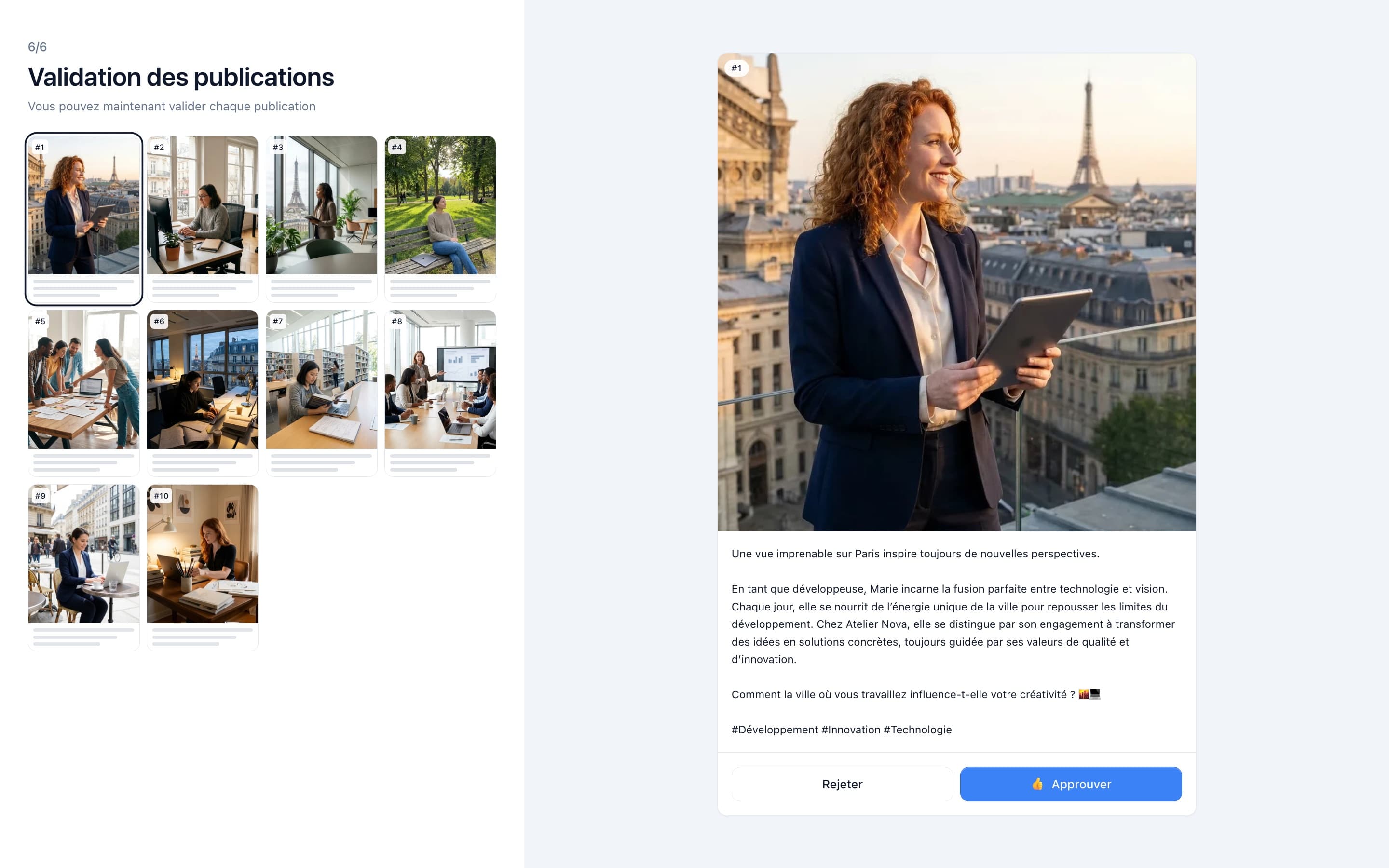
I brought it all into one tool: the app becomes the client's only point of contact, and they go through the chain on their own. A few questions, a selfie, and ten posts they recognise themselves in arrive in under a minute. They approve them one by one; a rejection reruns the image with their comment.

of batches settled to the last post by the client
69%of batches settled to the last post by the clientBy email44%In the app69%
faster to generate a batch
×30faster to generate a batchMake flow30 minMy tool< 1 min
Self'in, client-side approval, interactive prototype

Team side: no more chasing the client

With the Make flow, the coach tracked each client in a spreadsheet, chased them, then rebuilt the ten posts by hand on the client's platform.

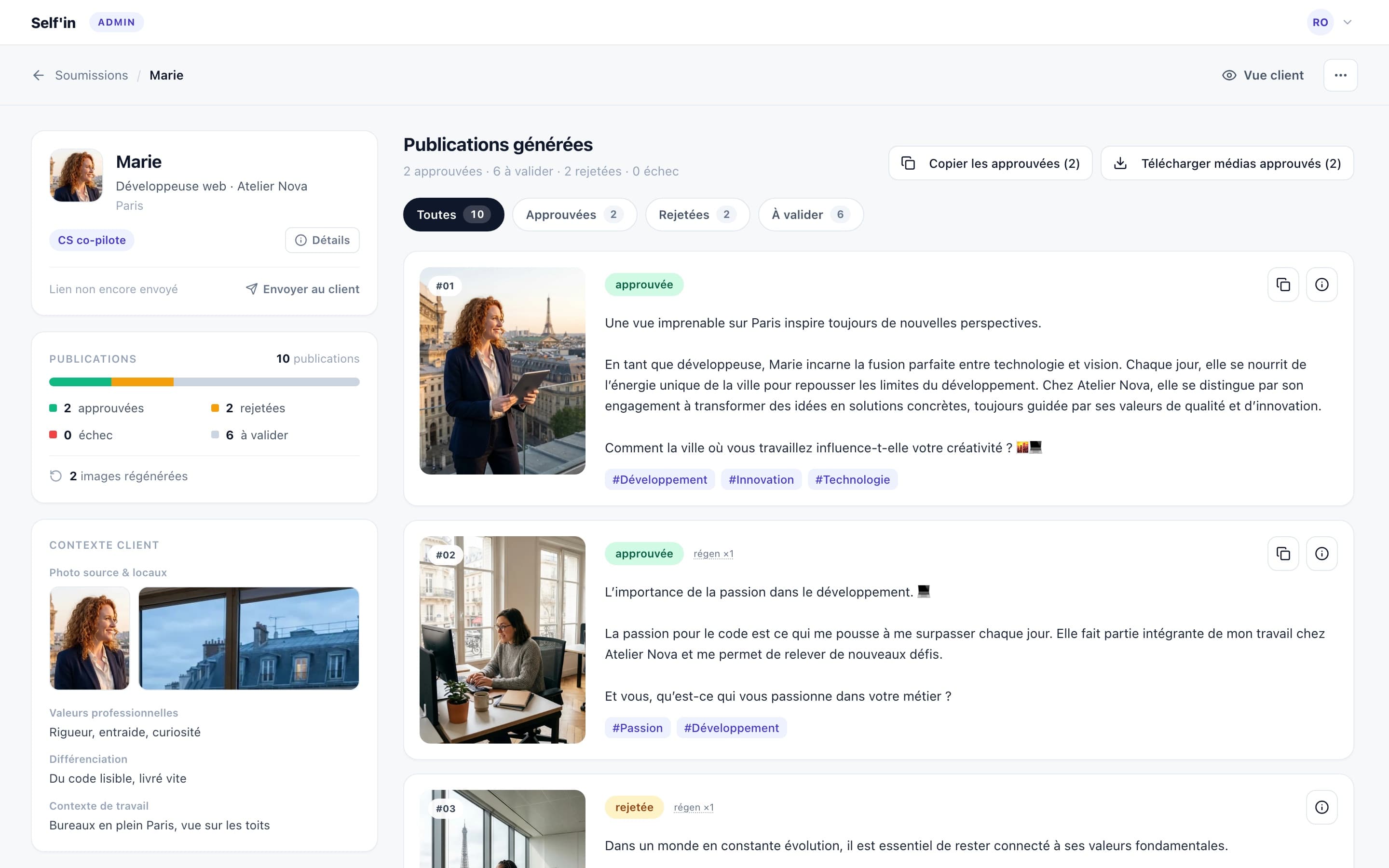
The back office I built them shows where each client stands, and the coach can fill in the questionnaire with the client during the call. For publishing, with no access to the platform's API and no help from developers, I came up with a bookmarklet: from the browser, it injects the ten posts, captions and images, in a few seconds. Coaches no longer type anything: they guide their clients.

  • Tracking each client in a spreadsheetThe back office shows where each one stands.
  • Chasing the client by emailThe client approves on their own, in the app.
  • Retyping the ten posts (~20 min)The bookmarklet injects them in a few seconds.
Self'in, the team back office, interactive prototype

Integrated into the platform, from a tool already running

To open it to every client, Self'in had to join the Artur'in platform.

The engineering team started from my tool, already in coaches' hands: the journey, the data and the edge cases were proven there, and it served as their spec. Coaches now switch it on account by account from the Customer Success back office.

The back offices

Behind the customer area, Artur'in's teams prepare the content, configure the accounts and support the clients. Their tools matter just as much: every minute saved on the team's side is multiplied across every account.

The content back office

Moderating and generating content for every client took the content team too long.

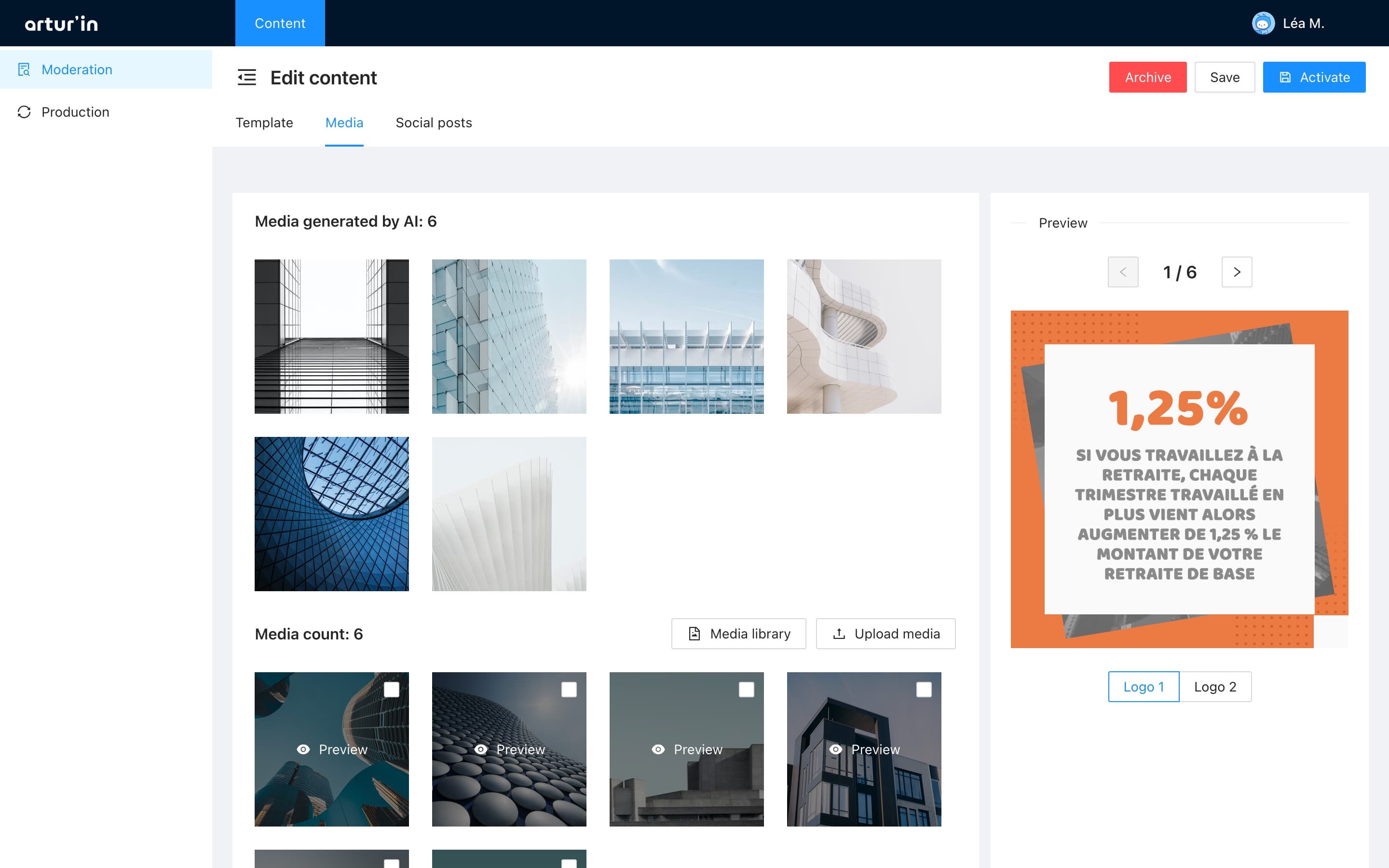
I rethought the whole content back office around those two moments. Each piece of content is prepared in one place, with its media, its visual and its social posts, then goes through moderation before it reaches clients.

saved every week by the content team
½ to 1 daysaved every week by the content team
The content back office, interactive prototype

The Customer Success back office

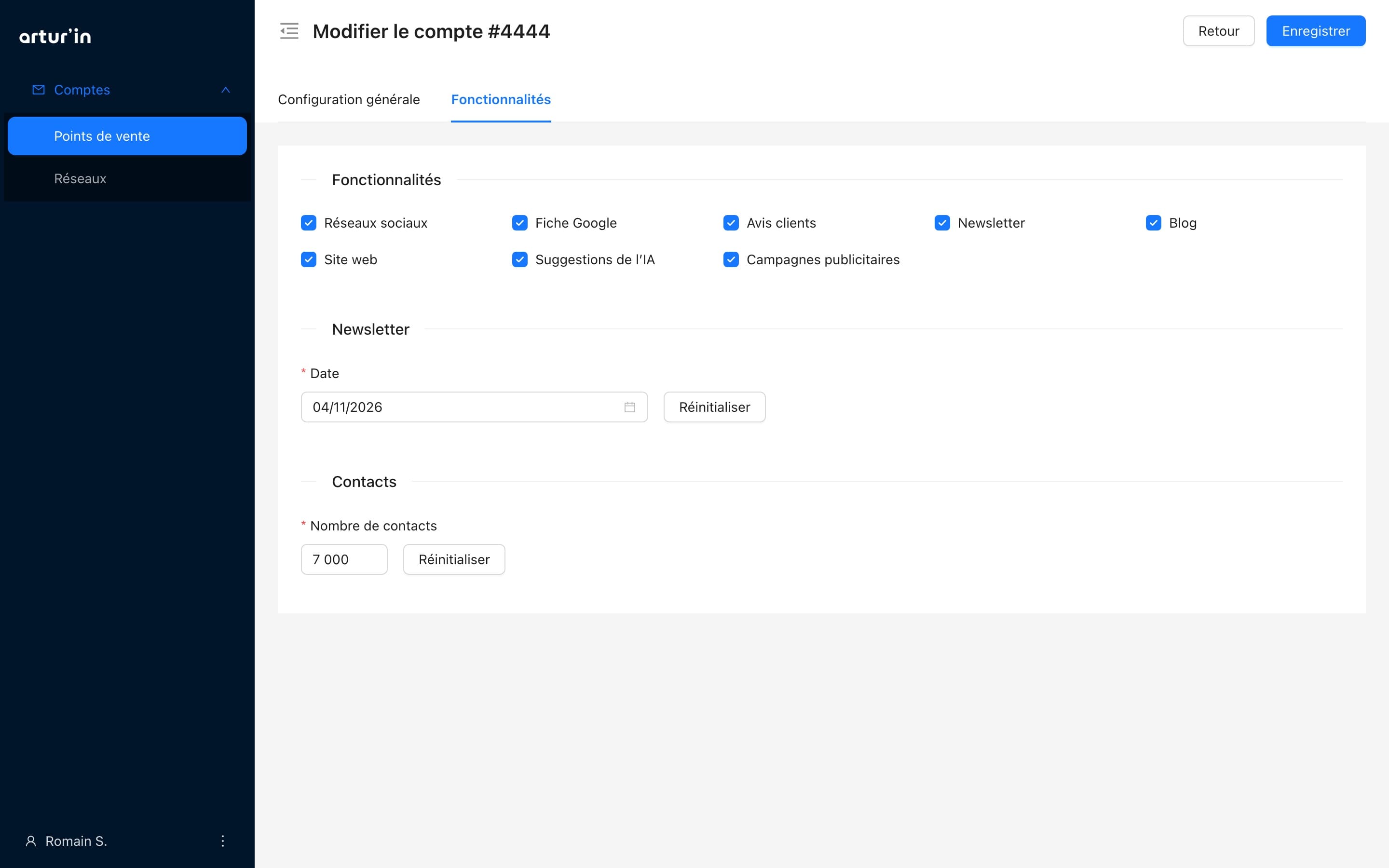
The Customer Success team's back office had to move to React: a chance to bring an account's whole configuration into one place.

I led this redesign in late 2025. Everything that configures an account, from a single outlet to a large network, is now there: the services switched on, the newsletter, a network's outlets.

The Customer Success back office, interactive prototype

How I work

  • Delivering something that works

    An app wired to the API's format, internal tools in production: the engineering team picks up a running product, not a mock-up to reinterpret.

  • Measuring before deciding

    Over a third of approvals got lost in email: that figure decided the in-app approval. Since then, the back office follows each step, from the opened invitation to the last post settled: we see where clients drop off.

  • A design system that follows the product

    Three successive design systems, in step with the technical migrations (Angular, Vue, then React with shadcn): every module shares the same components, and the engineering team doesn't have to reinvent each screen. I carried them through, leading a team of five designers.

Working with Romain is a guarantee of quality. He understands both the business and the technical stakes, and can unblock complex UX problems.
Juliette MauduitHead of Product, Artur'in

A product to grow, for clients and teams alike?

It's what I've done with Artur'in since 2018. Let's talk about your product.